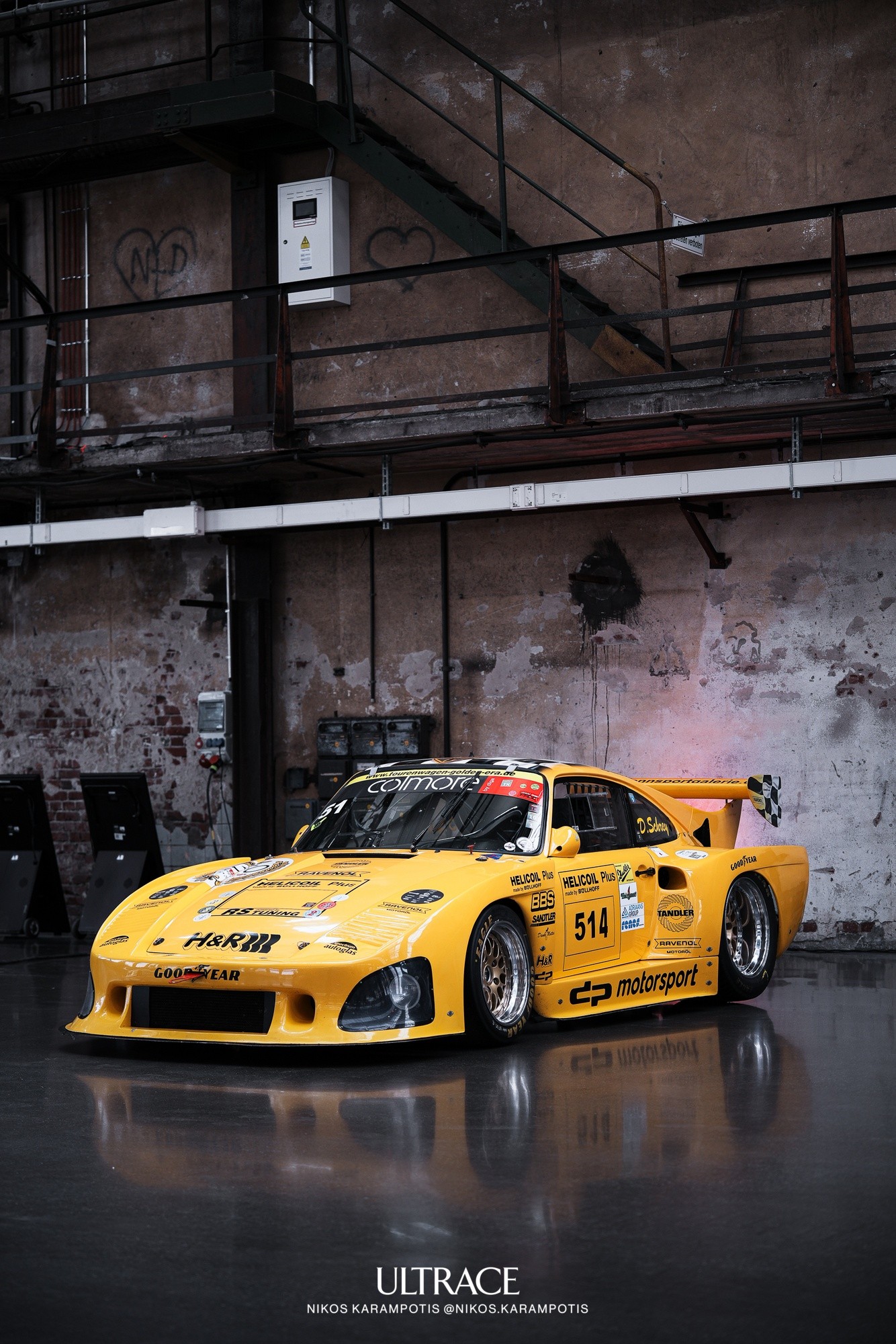
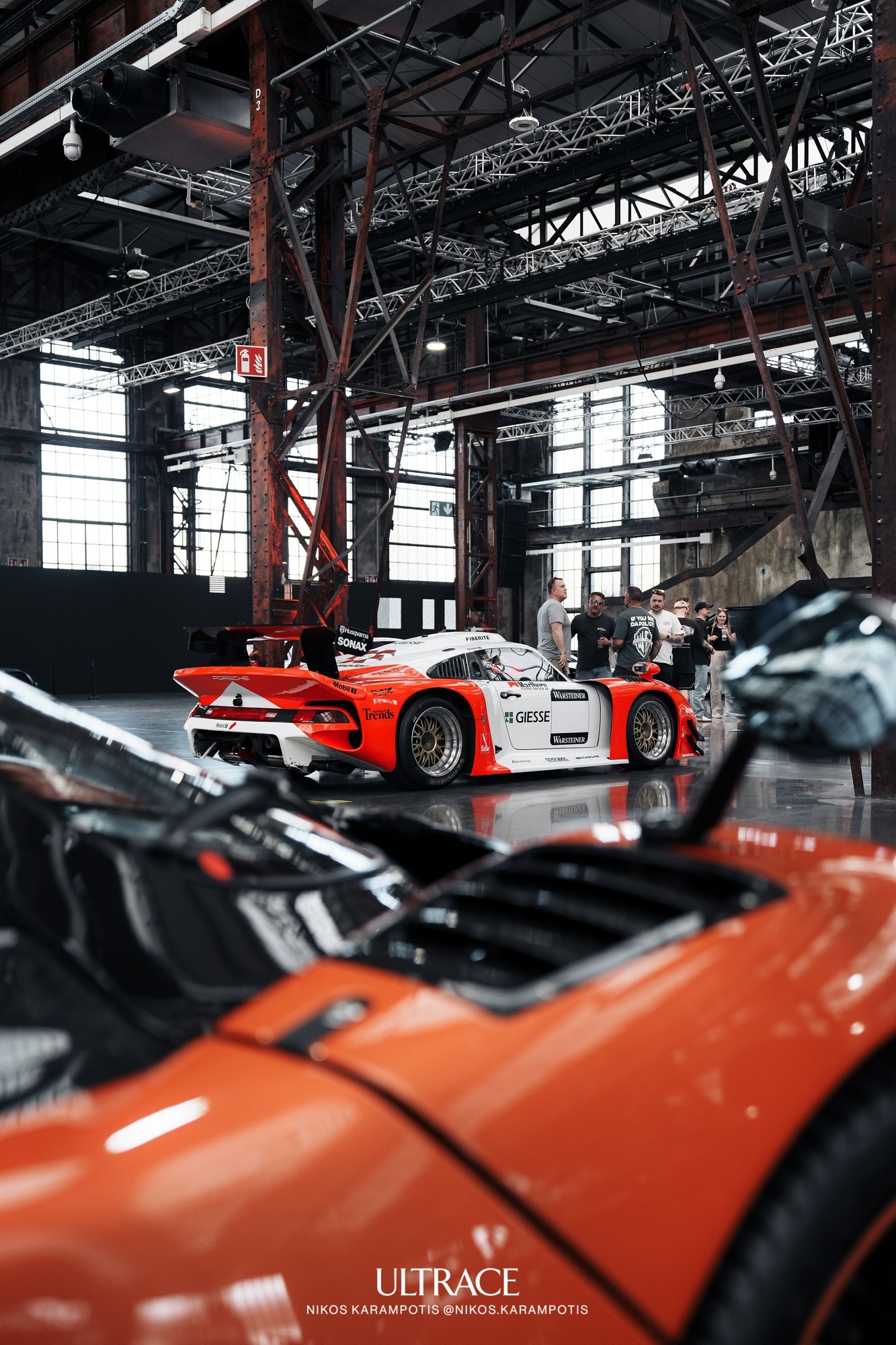
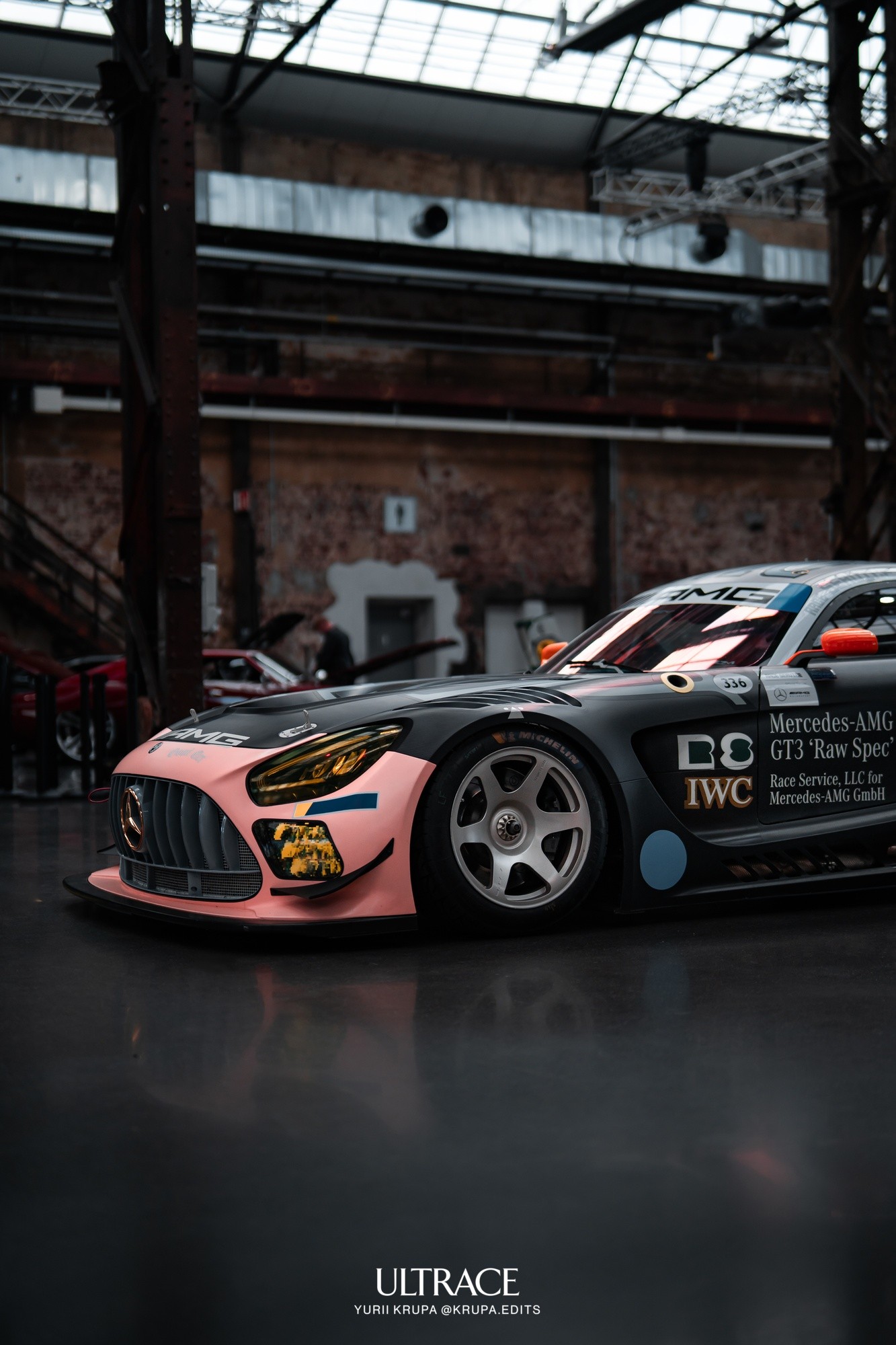
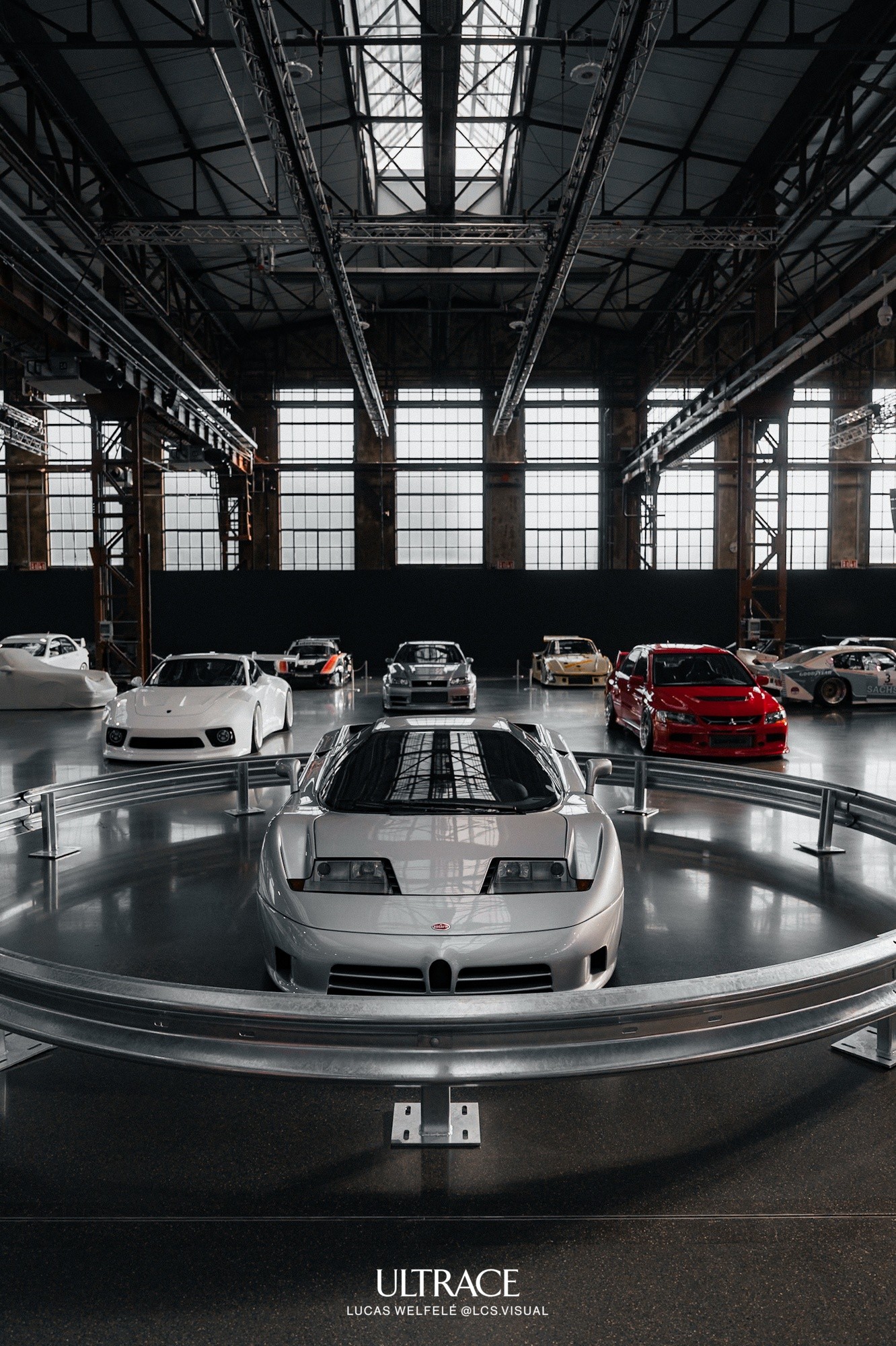
For years, while organizing an international event in Poland, we were asked whether Ultrace would ever take place beyond the borders of our home country. We knew that moment was getting closer. When the time came to choose the location for the first international edition, we decided on Düsseldorf, and one of the key reasons was the absolutely exceptional interiors of Areal Böhler. From the very first encounter with the space, it was clear that it offered the possibility of creating something more than just another edition in a new location. The raw architecture of the former industrial halls, their scale and character, made them feel not like a backdrop for the cars, but like an active part of the entire experience.


Bringing Ultrace to Germany required more than repeating a concept people already knew. We were never interested in moving Ultrace to a new country in unchanged form. What we wanted to build was our own interpretation of a future automotive event. One that remains a platform for everything most exciting in motoring, but presents it in a new way. Alongside historic race cars, museum exhibits, one-off creations, hypercars and the strongest projects from the enthusiast community, there was also an environment that was not an addition, but part of the exhibition itself. Modern technology, light, sound and the distinctive atmosphere Ultrace has been building for years became tools for telling the story of this show. The foundation remained the same: cars, scene, people, selection. What changed was the language through which the whole thing was expressed.


For nearly one hundred and ten years, Areal Böhler has occupied its place on the left bank of the Rhine, just minutes from the center of Düsseldorf. It began as a steelworks producing specialist steel for German industry, then gradually evolved into a living hub for business, fairs and events. Still, the format introduced by ULTRACE Germany was something this space had never hosted before. Raw brick, concrete floors, steel structures carried by monumental columns and openings in the roof created a setting charged with its own tension. During golden hour, light reached deep into the halls, settling across bodywork and catching paint, aluminium and polished wheels. Each of the five halls had its own character, its own proportions and its own way of receiving light. Because of that, the exhibition could embrace sharp contrasts without losing coherence, while the space itself brought a depth no mere gathering of rare cars could achieve on its own.


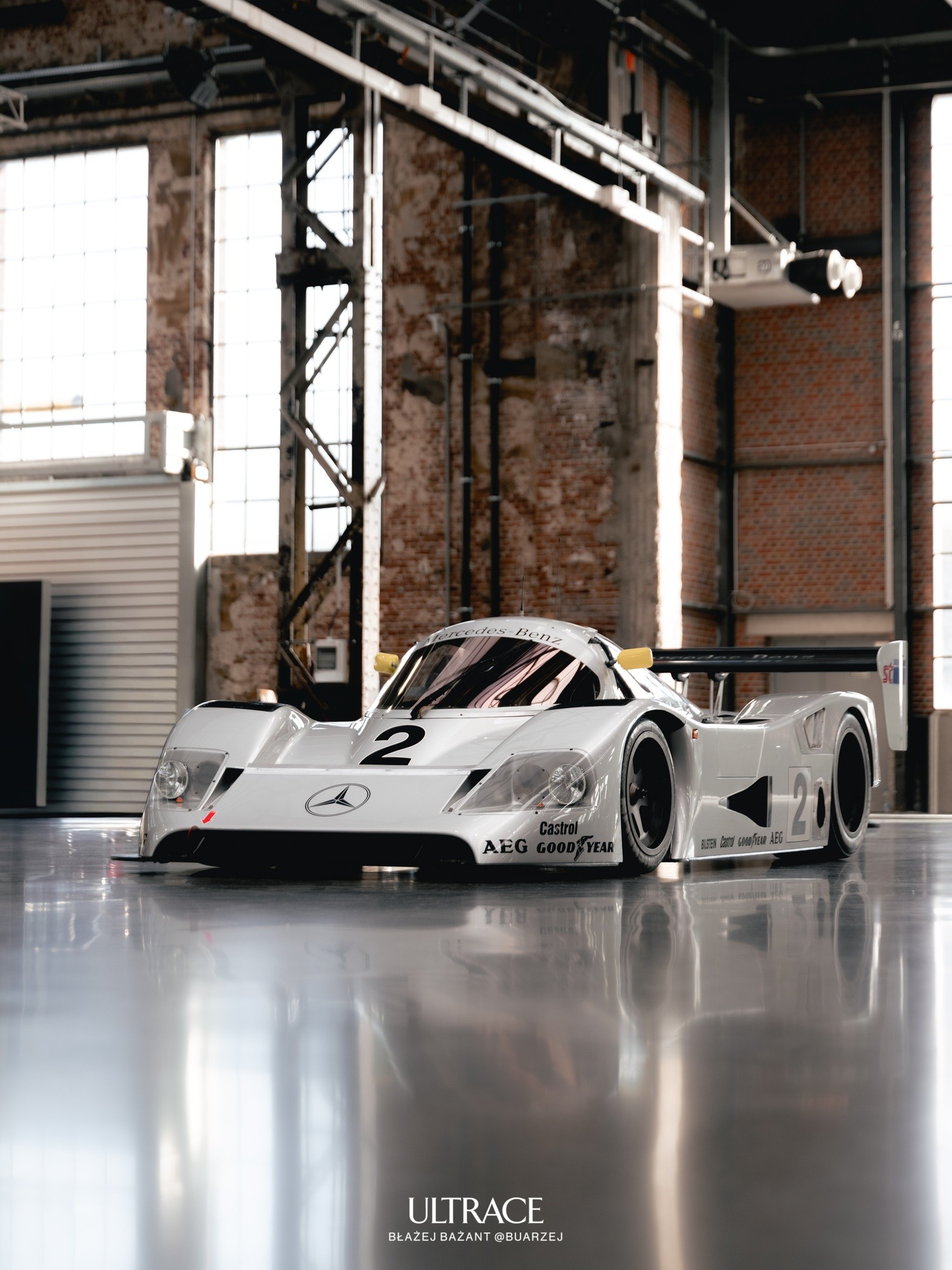
The Mercedes hall was restrained in its design, yet full of energy. A separate softbox hovered above each of the four cars, while light and sound together created an experience that felt far more immersive than a conventional display. The interior worked almost like an installation. All four exhibits came from the Mercedes-Benz Museum in Stuttgart and represented the strongest decade in the brand’s motorsport history. The Sauber C9, the Le Mans prototype that delivered victory for Mercedes in 1989, stood beside the C112, a 1991 road concept intended for a production run of one hundred cars that never progressed beyond prototype stage, and the C292, a Group C prototype from the same year. Completing the composition was the CLK GTR, the FIA GT1 homologation car that claimed the title immediately after its debut in 1997.


Deep inside the main hall, a black curtain marked the entrance to 143BPM, an installation built by Filip Popik, known as Rybskie, around the HWA EVO, a contemporary reinterpretation of the legendary Mercedes 190E EVO II. The acoustically dampened space, a vast colour shifting softbox sculpting the silhouette of the car, and music playing at 143 beats per minute, from which the installation took its name, created a world of its own. Inside, half darkness and controlled atmosphere took over. You could be alone with the car there, as if the rest of the event had fallen away. In that setting, it resonated differently, closer to an installation than a traditional exhibit. Many visitors stayed there longer than they expected.


Koenigsegg arrived in Düsseldorf with its own installation, titled Ghost Squadron. Within it, the Regera and the Jesko were presented not only as contemporary hypercars, but as expressions of the entire universe built around the brand. These were machines capable of raising the temperature of an entire hall on their own, yet here they also formed part of a broader story about the modern extremes of performance, design and technology. Their presence showed just how wide the scope of ULTRACE Germany had become. Alongside museum exhibits, historic race cars and independent tuning projects stood cars representing the absolute peak of contemporary automotive possibility.

Right beside the main stage stood Horsepower, an installation created by French artist Bleumode, Julien Boudet, in collaboration with Rennmeister and Ultrace. Its starting point was a classic BMW E30 in Jägermeister colours. The four wheels had been replaced by four motorcycles, merged into a single machine, while the build itself was executed by the team from nightride.pl. In the eighties and nineties, Jägermeister orange became one of the defining visual codes of DTM. Bleumode took that symbol from the world of racing and reassembled it into a completely new composition. There was humour in it, irony too, but also a remarkably precise sense of image making. It was almost impossible to walk past without stopping.
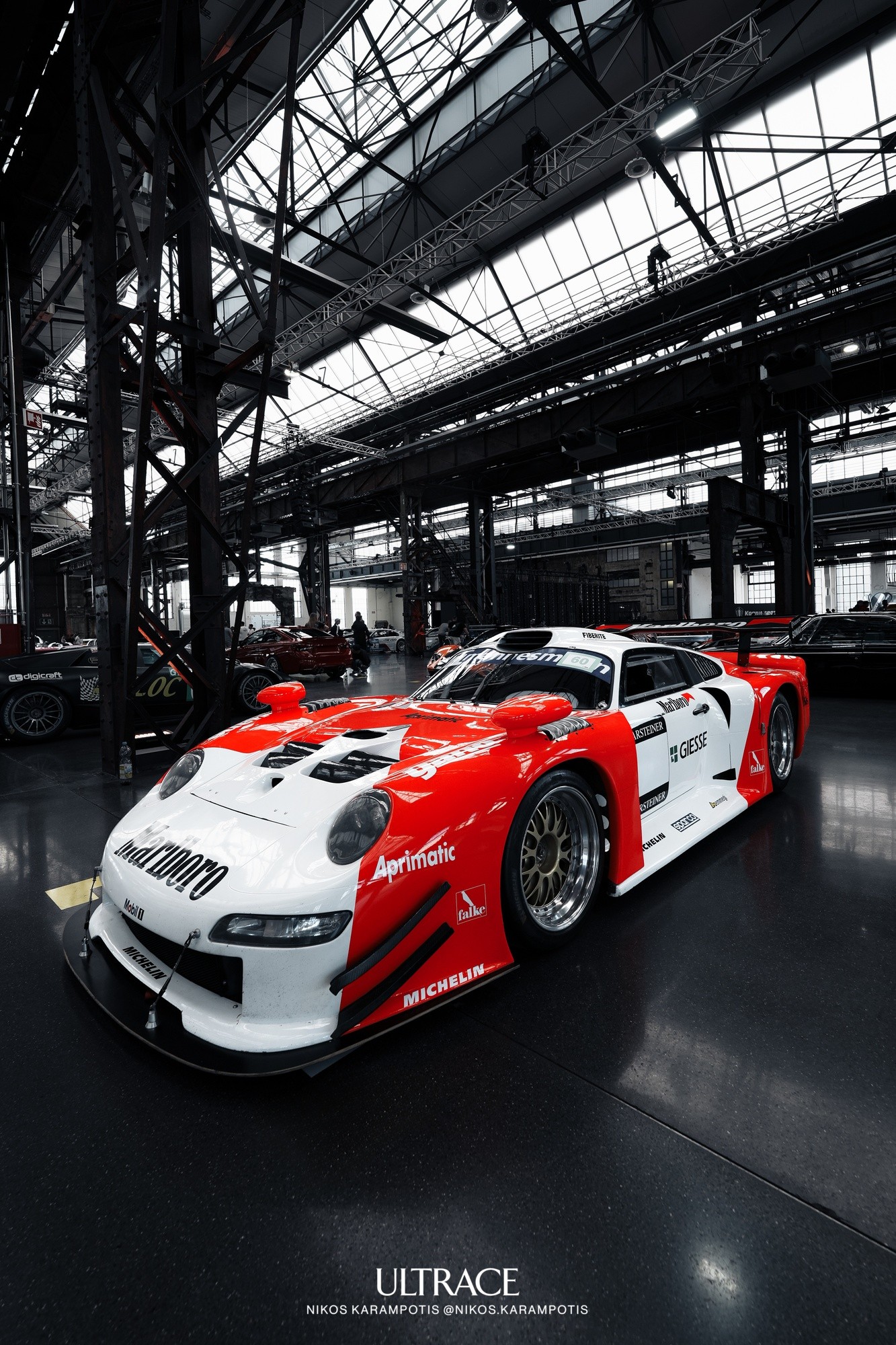

Rennmeister played a part in Düsseldorf that went far beyond standard partner presence. Their space led visitors straight into the world of classic motorsport and built a distinct atmosphere rooted in authentic racing heritage. The BMW E21 Group 5, the Porsche 962 and the surrounding period details made it one of the most characterful sections of the entire exhibition. That impression was strengthened by the presence of Kremer Racing competition cars, which added another powerful reference point for those raised on the history of Group 5 and endurance racing. As a result, this part of the event carried not only style, but the real weight of motorsport history.

One of the most anticipated parts of the event unfolded in the Active Zone. Every few hours, as part of the Never programme, technicians fired up a line of extraordinary machines inside a dedicated area. The Mercedes-Sauber C11, Porsche 917, Porsche 908, Mazda RX-7 Le Mans, BMW X5 LM V12, BMW 328 Kamm Coupe, BMW M5 CSL Prototype, Ferrari 348 Koenig Specials, AMG GT3 RAW SPEC and Gumpert Apollo. Each came from a different context, each carried its own place in automotive history. Here, however, they were not simply displayed. They were alive. The engine note and the echo ricocheting through the steel structure of Areal Böhler created something no museum presentation can truly recreate. Two moments stayed in the memory most vividly: the ignition of the Sauber C11 and the sound of the BMW X5 LM V12. The C11 brought pure motorsport history into the hall, while the X5 LM remains one of the strangest prototypes ever produced by BMW M. A family SUV with a near seven hundred horsepower V12 sounded like a nineties racing prototype and, from the first ignition, drew people in from every other corner of the venue.


The BMW hall was dedicated to the fortieth anniversary of the M3. BMW M from Munich marked the occasion with its own collection. There was a chillout area, walls covered floor to ceiling in M Series posters, and spaces designed for people to pause and stay for a while. The selection stretched from the E30 M3 to projects that never reached production.
The M3 Compact, a mid nineties concept, and the E46 M3 Touring, the only prototype of that body style ever to leave the factory gates in Munich. At the center of the hall stood a BMW M2, worked on throughout the weekend by Rae Roberts. Layer by layer, she painted directly onto the bodywork, and the final composition took shape in front of the audience, hour by hour, until the piece was complete.


At nine in the evening, the main hall changed its character. Night Access began, an exclusive three hour evening chapter of the event. Natural light gave way to a carefully directed spectacle as suspended lighting installations started to take control of the space. Colours shifted fluidly. At times everything turned red, at others it dissolved into darkness, while pinpoint lighting isolated individual cars. Behind the booth stood Sept, moving between hypnotic techno and ambient textures. He later described his set as a dialogue between machines and sound, and that was exactly how it felt. The same cars that stood in calm exhibition mode during the day became part of a club like environment after dark.


At the end of the two days, the Top 10 of the exhibition was announced on the main stage. The international jury, made up of Khyzyl Saleem, better known as The Kyza, Mike Burroughs of Stanceworks, photographer Larry Chen and Ash Thorp, selected the ten strongest projects from everything shown across the halls of Areal Böhler. These are names that have shaped directions in design, photography and car culture for years. Among the projects under consideration were also cars from the private collections of The Loh Collection, Chrome Cars and RS Racetec. The event was also visited by Sung Kang, best known for playing Han in the Fast & Furious series, who appeared while promoting his film Drifter.


By the end, it was clear that ULTRACE Germany had found its place beyond Poland.
Everything Ultrace had grown from at home remained intact. Around that foundation, however, two new dimensions had emerged. The first was the trust of partners who, for the first time, opened their archives for two days inside a hall where independent tuning projects stood alongside them. The second was a new exhibition format in which scenography, lighting, music and the work of artists became just as important as the cars themselves. The first international edition of Ultrace came to a close. From the perspective of that first edition, the second can already be seen on the horizon.